Greenfield vs Infill Australia
When land becomes scarcer and housing demand keeps climbing, the real winner is usually the strategy that best matches the market cycle, the suburb, and your risk tolerance.
Australia’s property market is under pressure from population growth, housing undersupply, planning constraints, and infrastructure bottlenecks. In that environment, the debate around greenfield vs. infill development in Australia is more than academic—it shapes where people live, how developers allocate capital, and where investors may find the strongest long-term returns.
For buyers, developers, and investors, the question is not simply which model is “better.” The real question is: which strategy wins for your objective—cash flow, capital growth, speed, affordability, or development margin?
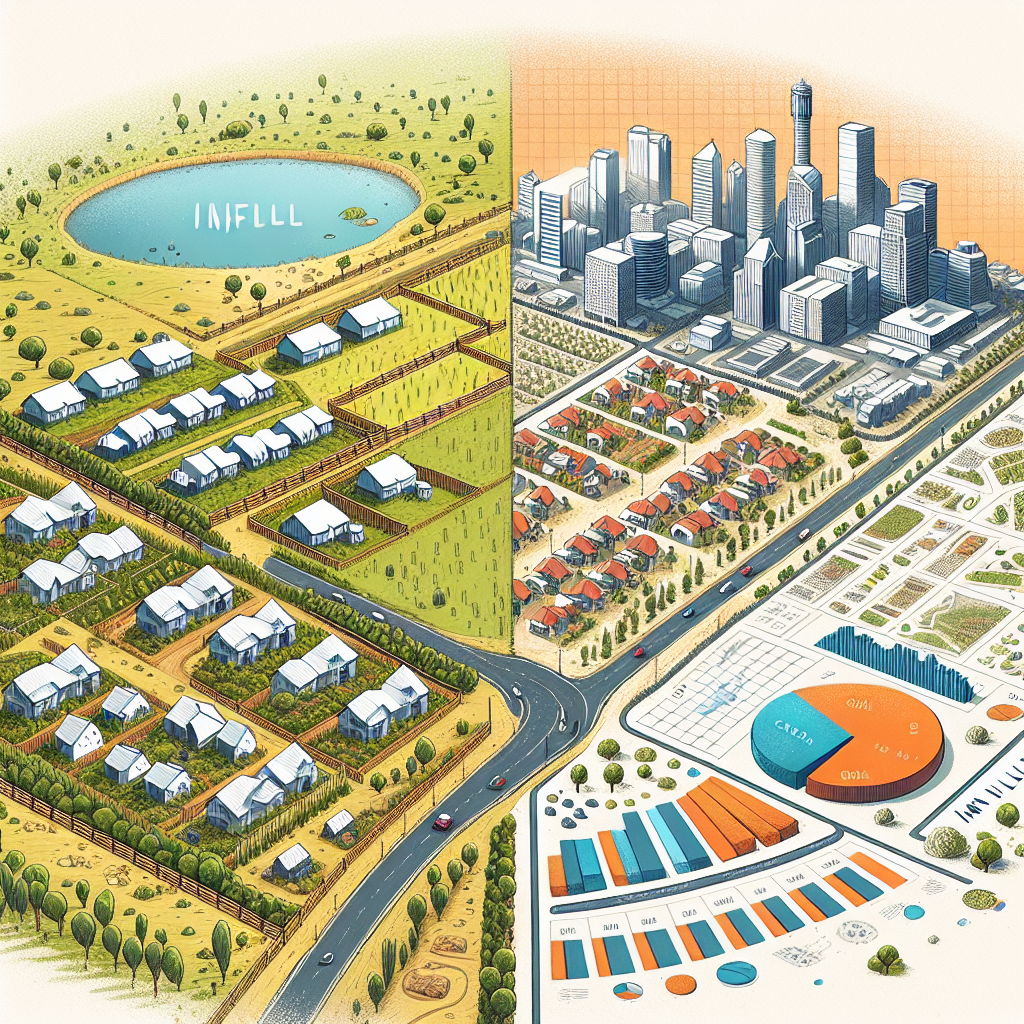
Greenfield development often wins on affordability and scale. Infill development often wins on location, scarcity, and long-term demand.
What Is Greenfield Development?
Greenfield development refers to building on previously undeveloped land, usually in outer suburban growth corridors. These projects are commonly delivered as master-planned communities with staged land releases.
Typical greenfield features
- Larger land parcels
- New roads and utility networks
- House-and-land packages
- Brand-new schools, parks, and retail centres
- Family-oriented community planning
In Australia, greenfield projects are common across the outer rings of Melbourne, Sydney, Brisbane, Perth, and South East Queensland growth areas such as Ipswich, Logan, Ripley Valley, and Caboolture.
Discover the #1 tax secret wealthy Australian property investors use to grow their portfolios faster — even in a high interest rate environment.
- Learn how to turn wear and tear into wealth
- See real examples of $15,000+ first-year deductions
- Understand how to structure your purchases for maximum after-tax ROI
Download Your Free Wealth Building Guide
This ebook reveals how to legally slash your tax bill while building long-term wealth through property. Learn the strategies savvy investors use to gain an edge — even before settlement.
- Maximise tax deductions and improve cash flow
- Understand Division 40 vs 43 and how to claim both
- Position yourself to reinvest and scale faster
Why greenfield attracts attention
For many buyers, greenfield estates offer a lower entry point. A household comparing a new estate on the fringe with an established middle-ring suburb may find a significant difference in land cost, even if commuting costs are higher over time.
What Is Infill Development?
Infill development occurs within established urban areas where land is being redeveloped, subdivided, or intensified. Rather than spreading outward, infill increases housing supply closer to jobs, transport, and existing services.
Common infill project types
- Duplexes
- Townhouses
- Small apartment projects
- Knockdown-rebuilds
- Battle-axe subdivisions
- Redevelopment of underutilised urban lots
In Brisbane and other major capitals, infill projects are common in middle-ring and inner-ring suburbs where zoning, transport access, and lifestyle demand support higher density.
Greenfield vs Infill: Core Differences
| Factor | Greenfield | Infill |
|---|---|---|
| Location | Outer growth corridors | Established suburbs |
| Entry cost | Usually lower | Usually higher |
| Complexity | Often simpler sites | More planning and site complexity |
| Demand driver | Affordability and new stock | Convenience and land scarcity |
| Infrastructure | Often delivered in stages | Usually already in place |
Why Greenfield Can Win
1. Lower entry costs
Greenfield land is generally cheaper than comparable land in established suburbs. That matters for:
- First-home buyers
- Budget-conscious investors
- Builders seeking volume
- Developers targeting scale
For example, if an investor can enter a fringe-market house-and-land package at a materially lower cost than a townhouse site in a middle-ring suburb, the lower debt burden may improve short-term holding comfort.
2. Simpler delivery
Many greenfield projects are more straightforward from a construction perspective because they are built on prepared lots in planned estates. There are often fewer demolition issues, fewer neighbour objections, and more predictable built-form outcomes.
3. Family appeal
Greenfield estates usually appeal to owner-occupiers seeking:
- More internal space
- Larger backyards
- New homes with lower maintenance
- Community amenities designed for families
4. Scaling opportunities
Developers operating in growth corridors may benefit from repeatable product, standardised construction, and volume-based efficiencies.
Where Greenfield Falls Short
1. Oversupply risk
The biggest greenfield risk is simple: more land can keep coming. If a corridor has years of future supply, scarcity is weaker. That can suppress capital growth in the short to medium term.
2. Delayed amenity maturity
Although marketing material often highlights future schools, shops, and transport, those amenities may take years to fully arrive. Early residents can face longer commutes and limited service access.
3. Transport dependence
Many fringe developments are car-dependent. If fuel, tolls, and commute times rise, lifestyle appeal can weaken for some households.
Why Infill Can Win
1. Better location fundamentals
Infill is often close to:
- Employment hubs
- Train stations and bus corridors
- Hospitals and universities
- Retail and dining precincts
- Established schools and services
That proximity tends to support stronger buyer and tenant demand.
2. Land scarcity
Scarcity is a major driver of long-term property performance. In established suburbs, there is usually a finite supply of redevelopment-capable land. That can help underpin values over time.
3. Better use of infrastructure
From a city-planning perspective, infill is attractive because it leverages infrastructure that already exists. This is one reason state and local planning frameworks increasingly support urban consolidation in selected locations.
4. Higher-value end product
Well-executed infill projects can deliver products that attract strong demand from downsizers, professionals, and smaller households seeking convenience over land size.
Where Infill Falls Short
1. Higher acquisition costs
Buying into established suburbs means paying more for land. That increases project risk if resale values soften or build costs rise.
2. More complex approvals
Infill projects often face stricter planning controls, design codes, character overlays, setbacks, private open space rules, and neighbourhood resistance.
3. More expensive site issues
A seemingly attractive site can become costly if it includes:
- Demolition requirements
- Slope or retaining walls
- Stormwater upgrades
- Easements
- Service relocation
- Access constraints
Which Strategy Wins for Investors?
The winning strategy depends on the metric you care about most.
If your priority is affordability
Greenfield often wins.
If your priority is land scarcity
Infill often wins.
If your priority is easier execution
Greenfield often wins.
If your priority is stronger long-term location appeal
Infill often wins.
Simple Investor Comparison
| Investor Goal | Better Fit | Why |
|---|---|---|
| Lower-cost entry | Greenfield | More affordable land and product |
| Long-term scarcity | Infill | Established suburbs have limited supply |
| Faster feasibility clarity | Greenfield | More standardised product and estate settings |
| Premium resale positioning | Infill | Buyers pay for location and convenience |
A Practical Example
Buyer A chooses greenfield
They purchase a new house in an outer growth corridor. They gain:
- A modern home
- Lower maintenance costs
- A larger block
- Easier tenant appeal for families
But they also accept longer commute times, more competing stock, and slower scarcity-driven growth potential.
Buyer B chooses infill
They acquire a small redevelopment site in an established suburb. They gain:
- Better location
- Access to transport and jobs
- Stronger land scarcity dynamics
But they also accept higher upfront costs, more planning risk, and greater delivery complexity.
Final Verdict
Neither strategy wins in every market, but in many Australian capital-city settings, infill development often has the stronger long-term strategic edge because it benefits from scarcity, location, and established infrastructure. However, greenfield development remains highly competitive for buyers prioritising affordability, new housing stock, and simpler project pathways.
The smartest decision comes from matching the strategy to the goal:
- Choose greenfield if you value entry price, simplicity, and new-community appeal.
- Choose infill if you value location, redevelopment upside, and long-term scarcity.
Bottom line
If you are investing for convenience-led demand and land scarcity, infill frequently comes out ahead. If you are entering the market with a tighter budget or targeting broad family demand, greenfield can still be a very effective strategy.
Sources and References
- Australian Bureau of Statistics (ABS), housing and regional population data
- National Housing Finance and Investment Corporation / Housing Australia research
- Infrastructure Australia, urban growth and infrastructure planning insights
- State planning frameworks and local council planning schemes across Australian capital cities
- CoreLogic Australia market research and suburb-level housing commentary